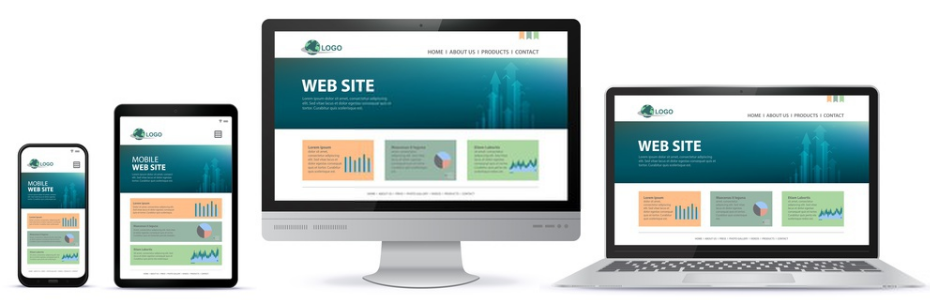
Awebstar is a leading web design & development company in Singapore. With a focus on delivering high-quality solutions, we specialise in web design, web development, e-commerce development, mobile app development, digital marketing, search engine optimization (SEO), and management software solutions. Our team of talented professionals is committed to creating visually stunning and user-friendly websites, powerful e-commerce stores, and building advanced mobile applications.

Logo Designing

As the logo design services, Awebstar uses the optimum UX and UI designs with cutting edge technology for logo designing.

Responsive Website design

To make the responsive website design, Awebstar focusses on an extensive integration of technology and effective designs.

SEO Services

Increase your website visibility by hiring the best SEO company in Singapore and boost your business performance.

Mobile App Development Services

Awebstar, a mobile app development company makes functional, alluring, and easy understandable applications for every business type

eCommerce Website Design Services

If you are searching for an eCommerce website development company in Singapore, then Awebstar is the most reliable company you can go with.

Showing posts with label digital marketing company. Show all posts

Monday, 28 September 2026

Choosing a Digital Marketing Partner: Red Flags Singapore Business Owners Should Watch For


Singapore has no shortage of digital marketing agencies to choose from, which sounds like a genuinely good thing right up until you're the one actually trying to tell them apart. Most pitches sound remarkably similar on the surface: "data-driven," "results-focused," "proven track record", and it's genuinely hard to know which promises are backed by real capability and which are simply well-rehearsed sales language repeated across dozens of client meetings.

The good news is that a handful of warning signs show up consistently across bad agency partnerships, regardless of the specific channel involved, whether that's SEO services, paid ads, or social media management. Learning to spot them before you sign a contract saves months of wasted spend and, often just as importantly, a damaged sense of trust in digital marketing altogether after a bad experience.

Guaranteed Rankings or Guaranteed Results

Any agency that guarantees a specific Google ranking, a specific number of leads, or a fixed return on ad spend before they've even looked at your business in any real detail is either overpromising to close the deal, or planning to hit that number through tactics that won't hold up long term once you look closely. Search rankings depend on a whole range of factors no agency fully controls, including competitor activity, algorithm updates, and your industry's overall search volume at any given time. A credible agency will talk about realistic ranges and timelines based on genuinely similar past work, rather than offering hard guarantees they can't actually back up.

Watch for this closely in SEO pitches, since ranking guarantees are one of the oldest tricks in the industry, and one of the easiest for a busy business owner to fall for when they're eager for results.

Vague Reporting That Focuses on the Wrong Numbers

Ask any agency what success actually looks like for your account, and listen carefully to the answer they give you. If the response centres mainly on impressions, likes, followers, or general "engagement" without ever connecting those numbers back to actual enquiries, leads, or sales, that's a clear sign the agency is optimising for metrics that simply look good in a monthly report, rather than metrics that genuinely grow your business over time.

A good partner should be able to explain, in plain and specific terms, how the work they're doing month to month connects directly to your bottom line. And they should be genuinely comfortable being measured against that real connection, not just against vanity numbers that are easy to inflate.

No Clear Explanation of What They're Actually Doing

Some agencies treat their entire process as a closely guarded trade secret, giving you polished monthly reports full of charts but very little real visibility into what specific work actually produced those results. While no agency truly owes you their entire internal playbook down to every detail, you should always be able to get a clear, specific answer to a simple question: "What did you actually do this month, and why did you do it that way?"

If every explanation comes back vague "we optimised your campaigns," "we improved your content strategy" — without any specifics you can actually verify or point to concretely, that's usually a sign there's considerably less substance happening behind the scenes than the invoice suggests there should be.


One-Size-Fits-All Packages With No Real Discovery Process

Be genuinely cautious of any agency that can quote you a full strategy and price within the very first phone call, before ever asking meaningful questions about your business, your customers, your competitors, or your past marketing performance. Good marketing strategy is built on a real understanding of your specific situation and context. An agency skipping straight to a generic package suggests they're likely running the exact same playbook for every single client regardless of actual fit.

This doesn't mean every proposal needs to take weeks of careful preparation before it's ready to present. But there should always be a clear discovery step involving real questions about your goals, your customers, and what's worked or clearly failed before, and that discovery should genuinely shape the recommendation, rather than a template being pulled off the shelf and lightly reworded.

Long-Term Lock-In Contracts With No Exit Clause

Digital marketing results, especially in areas like SEO and content, genuinely do take real time to build up properly. That part is entirely true and isn't itself a red flag on its own. What is a red flag is a contract that locks you in for twelve months or more with no reasonable off-ramp available if performance clearly isn't materialising after a genuinely fair trial period has passed. A confident agency is generally quite comfortable working on shorter, renewable terms instead, because they expect the actual results to be the reason you choose to stay, not the contract terms forcing you to.

Read the fine print carefully on notice periods and any early termination fees before signing anything at all, regardless of how compelling or polished the initial pitch happened to sound.

Ownership of Your Accounts and Assets

This is one of the most consequential red flags on this entire list, and also one of the easiest to miss entirely until it's genuinely too late to fix cleanly. Some agencies set up your Google Ads account, your Google Analytics property, your Meta Business Manager, or even your website hosting under their own credentials rather than yours from the very start. If the relationship later ends badly for any reason, you can lose access to years of campaign history, audience data, and conversion tracking essentially overnight, with no easy way to get it back.

Before any work begins, confirm explicitly and in writing that all accounts ad platforms, analytics, domain registration, hosting are set up under your own business's ownership from day one, with the agency simply added on as a manager or collaborator rather than being the primary owner of the account itself. This single conversation, had it happened early and clearly, would prevent one of the messiest and most damaging disputes that can happen much later down the line.

No Willingness to Share Past Client Results

Every credible agency should be able to point confidently to real examples of past work, ideally with genuine specifics attached, not just a row of client logos displayed on their website with no context. Be wary of agencies that speak only in vague generalities about their experience, or that seem noticeably reluctant to connect you with a past or current client for even a quick, informal reference call.

A short conversation with an existing client, even just ten minutes on the phone, often reveals far more about how an agency actually operates on a day-to-day basis than an entire polished sales deck ever could.

Pressure to Decide Quickly

Legitimate, established agencies understand that choosing a marketing partner is a real business decision that genuinely deserves proper time and consideration before committing. If you're facing heavy pressure to sign within just a few days, discounted "limited-time" pricing that conveniently expires right when you happen to be deciding, or repeated follow-ups that push urgency rather than offering genuine clarity, treat that as a real signal about how the relationship might actually feel once you're a paying client, rather than simply shrugging it off as a normal sales tactic.

What a Good Partnership Actually Looks Like

The flip side of all these red flags is worth spelling out clearly too, since it's easy to focus only on what to avoid. A good digital marketing partner asks detailed, specific questions about your business before proposing anything at all. They set realistic expectations rather than sweeping guarantees. They report on metrics genuinely tied to real business outcomes, not just vanity numbers. They keep you as the clear owner of all your own accounts and data at every stage. And they remain comfortable being evaluated honestly against the specific results they originally promised you.

If you're currently evaluating agencies, or genuinely wondering whether your existing partnership is serving you as well as it should be, it's worth running through this entire list honestly against what you're actually experiencing right now. And if you're looking for a sensible starting point for that evaluation conversation, our digital marketing services page explains exactly how we approach strategy, reporting, and account ownership the same standard we'd genuinely encourage you to hold any agency to, including us.

Digital marketing spend adds up quickly over the course of a full year. Getting the partner choice right at the very start is worth far more of your time than most business owners actually give it before signing on the dotted line.
Share:

Thursday, 30 April 2026

Digital Marketing Budget 2026: 6 Steps for Success

Digital Marketing Budget 2026
Considering the current trends in the digital environment, companies are constantly looking for new ways to improve and develop their presence on the World Wide Web and marketing strategies. It is always essential to beat competitors, which a perfect budget must supplement. Thus, as 2025 draws near, brands face growing digital marketing costs, new platforms, and a call for sophisticated tools to deliver results. Many businesses also seek guidance from the best digital marketing company to maximise their budget efficiency and overall ROI.

This guide outlines six actions to help you optimise your budget for digital marketing in 2025.

1. Evaluate Previous Performance: What Worked and What Didn’t?

Looking at the previous performance before determining your digital marketing budget for 2025 is wise. You can make the necessary improvements when you analyse what successful strategies you managed to employ in 2024 and what your plan lacked.

Key areas to assess:

  • Return on Investment (ROI): Evaluate each marketing channel's profitability. Which of these channels yields the highest value in your business? Which channel corresponded to high costs and low returns?
  • Traffic and Conversions: Know where your traffic is coming from and which traffic sources convert best. Focus on organic vs. paid sources, social media, email and other campaigns.
  • Customer Acquisition Costs (CAC): Were there areas that experienced high customer acquisition costs? You will be able to budget when your CAC has been effectivelyoptimised.
The next thing to consider is that once you have seen your previous performance, you are better positioned to deal with your budget by focusing on where you know your strengths and what will give you the best returns.

2. Set Clear Goals: Marketing Expenditure Management Based on Business Goals

Another critical budgeting step is matching the funds spent to your digital marketing and business objectives. Do you want more market visibility and sales, or to penetrate new markets? The budget will go nowhere or be developed aimlessly when no specific goals are established.

SMART goals to consider:

  • How can we get at least X per cent additional revenue via digital platforms?
  • Increase the number of followers from social media platforms by Y%.
  • Increase the traffic towards a specific website by Z% in the desired areas.
  • Optimise conversion rate by W%
These goals must meet the SMART criteria for Specific, Measurable, Attainable, Relevant, and Time-bound. Forming goals and objectives helps you optimise resource supply and monitor year-end results throughout the year.

3. Allocate Your Budget Across Key Channels: Diversify for Optimal Impact

The fact is that no one digital marketing works in a silo. As we approach 2025, organisations must adopt a channel marketing strategy by targeting areas where customers spend most of their time. But, as you may find out, there is little point in having such channels if you need help understanding how to allocate the budget across them correctly.

Here’s a breakdown of some of the key channels to consider:

a) The first popular industry term is Search Engine Optimisation (SEO)
Many believe that organic search is one of the best ways to get traffic. As a process, SEO needs ongoing commitment toward content production, research on keywords, technical issues, and link acquisition. Set aside some of your budget to improve your website’s features and ranking on the search engine results page.
b) Pay-per-click (PPC) Internet advertising, including Google Ads, is still relatively cheap to reach the identified audiences. Nevertheless, competition leads to an increase in the cost per click (CPC). The specific aspects to be highlighted include the following guidelines that should be adhered to in PPC campaigns. More information about PPC can be viewed here: Best Practices for PPC Campaign Management.
c) Social Media Marketing
Some social media in 2025 include Facebook, Instagram, Twitter, and LinkedIn. Include a budget for organic and for paid posts on social media. In this sense, the constant algorithm changes and the increasing advertisement cost define the balance between the organic and paid approach to social networks.
d) Email Marketing
Although it is one of the initial digital marketing methods, advertising plays a significant role in lead nurturing and customer relations. It was found that the revenue investment proportions for email marketing software, personalisation, and automated campaigns can be high, but the return on investment is also high.
e) Content Marketing
Every marketer and business organisation knows content marketing is the foundation of search engine optimisation, social media and lead generation. Develop professional-quality textual content for a blog, videos, graphic images, or other exciting material. As for the content, invest in its creation and promotion because only the right audience needs to see it.
f) Influencer Marketing
The best thing about working with influencers is that it can help increase your brand’s credibility and reach. It means that in 2025 next year, specialists and global endemic creators can be more effective than stars, so adjust your influencer marketing budget with this point.

4. Factor in Technology and Tools: Invest in the Right Platforms

You must work smart in the digital world using automation and analytics to manage your campaigns. It indicates that by the time 2025 rolls around, the companies that will be better prepared with the technologies that allow them to get more from their investments will be the winners, so make sure you still set a portion of your budget on technology that assists you with making your processes leaner.

Key investments:

  • Marketing Automation Software: Outsourcing activities that would otherwise require consistent manual input, like email marketing, scheduling of social media posts, and follow-up to leads, makes work efficient and adds a human touch.
  • Customer Relationship Management (CRM): The CRM system monitors customer relationships and interactions and governs and manages leads.
  • Analytics Tools: Tracking specific indices such as website traffic, customer conversion ratios, and other related customer trends helps fine-tune the approach. Indeed, there are opinions, such as those provided by Google Analytics, SEMrush, and HubSpot.
When incorporated into your digital marketing campaigns, these tools increase efficiency, effectiveness, and chances of success.

5. Prepare for the Unexpected: Volatility Flexibility in Budget

Perhaps it is not shocking that the trends that define the first half of early 2025 will look quite different from those that impact the mid-year. That is why it is necessary to integrate flexibility into your budget calculations.

How to create a flexible budget:

  • Set Aside a Contingency Fund: Talk about a flexible budget; any marketing professional should always set aside at least 10 per cent of their budget for unanticipated opportunities like a new social network that gains ground or a competitor’s aggressive campaign on social media.
  • Regular Budget Reviews: Do not allocate your budget once a year like most people do; try to do it every quarter. The ability to shift budget means moving from performing poorly with audiences to a channel where perhaps higher growth can be experienced.
  • Stay Agile: Whether regarding trends, algorithm updates or new technology, one has to remain alert and adaptive to keep track of how to get nearer and engage the audience differently.

6. Track and Measure Performance: Monitor Your ROI

Indeed, as with any other online marketing campaign, the real work starts once your digital marketing budget is set. For investors to realise that their money is yielding value, they must monitor performance consistently. If the marketing efforts continue for some time with no supervision, then the focus shifts to the strategies used, and resources are spent where there’s no return.

Key performance indicators (KPIs) to track:

  • Cost Per Lead (CPL): Find out the cost of acquiring leads through various channels and determine the costs of gaining leads.
  • Conversion Rates: Determine the effectiveness of campaigns to convert leads directly to paying customers.
  • Customer Lifetime Value (CLV): Determine the CLV of a customer to understand how marketing communication affects the long-term revenue of your business.
  • Website Traffic and Engagement: Statistics such as the number of visits to the website, bounce rates and the time spent on the website will determine if your SEO and content marketing strategies are productive.
Use Google Analytics, Fb Insights, and your CRM device to observe these KPIs. Make further changes to your budget during the year, depending on which strategies are effective and which are not, so you get the most bang for your buck.

Conclusion

The outlined objectives sum up the need to develop a sound digital marketing budget for the year 2025, the need to set goals and objectives, be prepared to make changes, and avoid anticipating that the future digital world will remain constant. The following six techniques, analysing outcomes, establishing aims, spreading marketing costs, choosing technology, incorporating options and maintaining optimisation, will pave your business to success.

In the digital world where competition intensifies, a reasonable marketing budget is often the thin line between keeping things Status quo and making radical advances in your marketplace. So, digital marketing could be your year once you have the right strategy in 2025.

Share:

Featured post

Choosing a Digital Marketing Partner: Red Flags Singapore Business Owners Should Watch For

Singapore has no shortage of digital marketing agencies to choose from, which sounds like a genuinely good thing right up until you're t...

Labels

About Me

My photo
singapore, Singapore
Awebstar is a leading web design & development company in Singapore. With a focus on delivering high-quality solutions, we specialise in web design, web development, e-commerce website design, mobile app development Company, digital marketing, search engine optimization (SEO), and management software solutions. Our team of talented professionals is committed to creating visually stunning and user-friendly websites, powerful e-commerce stores, and building advanced mobile applications. With our expertise in digital marketing strategies and SEO, we help businesses reach their target audience and achieve online success.