The "aesthetic drive" period for web design has completely disappeared. By 2026, companies with successful online platforms will be the ones whose websites take a conversion-focused approach rather than just aesthetics. Recent data shows that every $1 spent on using an improved user experience (UX) results in an estimated average of $100 return across the full life cycle.
At Awebstar Technologies, we are aware of the transitions taking place with today’s consumer, who is more distracted, more privacy-conscious, and has a greater need for speed than ever before. Therefore, you should incorporate these web design trends 2026 to attract users' attention and also their 'Buy Now' click.
Generative Engine Optimisation (GEO) & AI-Ready Layouts
There is going to be an increase in AI agent usage to conduct queries, so you’ll need to design your site for both humans and AI scrapers who will summarise your value proposition. Search results would be almost entirely AI-generated. Your site’s design has to consider both users who browse with AI agents and AI scrapers that will ultimately summarise your value proposition.
Moving towards Semantic Content Architecture means we are getting away from keyword stuffing to something called “Entity-Based Design.” Your layout should have clear and defined attributes of what your product is, who the product is intended for, and why the product is the best.
This is through the use of structured data and an ultimately defined style of visual hierarchy.
Unlike vague taglines, today’s contemporary web design has a focus on alternatives to traditional design and uses an “I can answer” or “Answer First” model of Hero Section design.
Therefore, within the top 20% of your site, the most visually relevant information should be structured in a way that is easily read (machine and human) to facilitate maximum conversions through a generative search engine.
The Modular Conversion Gent of Bento Grid Layouts
Designed after the segmented compartments of Japanese lunch containers, the Bento Grid sets the bar for user interface and user interaction design trends in 2026.
Conversion-Focused Web Design
When it comes to quickly viewing content visually, the Bento Grid allows for various types of information (e.g., reviews/testimonials, product characteristics, trust symbols) to come together in a visually organised method, rather than appearing to be too busy.
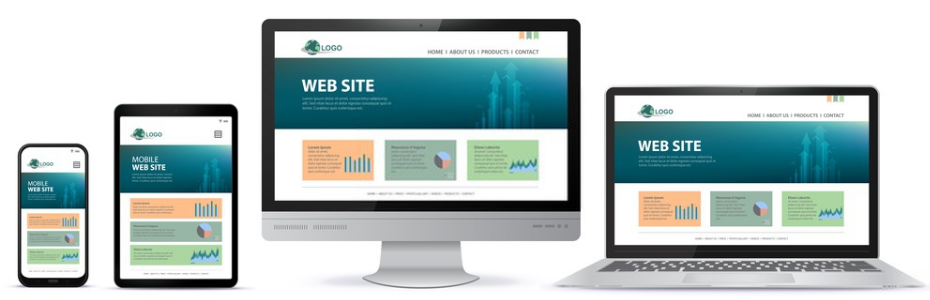
When it comes to mobile usability, the Bento grid is the way to go because it works. The elegance of the Japanese bento box is seen in how the items on the grid will be viewed as a 3x3 layout on desktop devices, but will be automatically joined as one unit on mobile, thus keeping the layout the same across different devices.
Kinetic Typography and Micro Interactions
Text is often overlooked in 2026 because it doesn’t move. The current trend of web design for 2026 is called “Kinetic Typography.” This describes text moving, stretching, or being affected by the way someone scrolls through a website.
Tip from an expert: Use motion to draw focus, not just to create movement. When you see a headline that is “growing” or getting bigger as you scroll down, it tells your brain this is a headliner; therefore, this is an important piece of information.
Micro-Interactions (Feedback Loops)
Micro-interactions are all of the small items we come into contact with when using a website (the little wins in UX). For example, a button may change colour slightly when you mouse over it, or a progress indicator may show an animation indicating how far along you are in completing a lead form.
These subtle forms of “micro-interactions” decrease the amount of “friction” in completing forms by creating a sense that there is somebody immediately responding to you in the moment, therefore increasing your trust with that brand and leading to higher rates of completed checkouts on your site.
Designing for Accessibility
Designing for Accessibility is now mandatory - companies are putting more effort into creating inclusive, usable websites for all of their users!
Some examples of designing for Accessibility include:
- Correct color contrast
- Keyboard navigable interfaces
- Compatible with screen readers
- Alternative text used for visuals
- Easy-to-read typography
Inclusive design enhances the functionality of a website and increases the number of people who can use your website while helping you adhere to the standard of accessibility compliance.
Adaptive Hyper-Personalised Interfaces
The "one-size-fits-all" concept for websites came to an end in 2024. In 2026, new techniques for online marketing are developing user/method-based faces/interfaces.
- Morphing the User's Behaviour: If a user enters your website looking for "how to…" via a blog post, the UX/UI will provide them with an emphasis on educational material. When they enter through a search for "what's my price," your website will provide an automatic emphasis on "Start Free Trial' buttons and pricing comparison tables.
- Dark Mode 2.0: The original concept of a toggle no longer exists. Today, a majority of websites have a sensor(s) in their environment that allow automatic changes in contrast and brightness, to keep the user comfortable (and therefore browsing your site for longer periods of time).
The "Thumb-Zone" & Vertical-First Navigation
Mobile devices generate around 80% of all web traffic in Singapore, leading to some significant changes in how we design modern websites and where we position navigation on our screens; primarily,y it has moved from the top of the screen down to the bottom.
"Thumb Zone" refers to the area on smartphone screens (the area that users can easily access with their thumb when holding their phone in one hand). Thus, using it as an ideal place to put your main Call To Action (CTA) and/or navigation menu will eliminate any physical friction related to clicking, which is fundamental to conversion-centred web design.
Sustainable & Lightweight Design (Green UX)
The demand for sustainability will be a significant factor influencing consumer purchasing decisions as we approach 2026 and beyond. Increasingly, consumers are penalising "heavy" websites that utilise excessive 4K video, large file sizes and inefficient scripts for the amount of carbon they generate (they will likely stop using such websites).
In addition, search engines are penalising these websites for their carbon footprint. Darker Color Palettes are considered to be more environmentally friendly, as they require less energy to display on battery-operated devices like cell phones (OLED screens).
Vector Images vs. Raster Images: More and more illustrators are using hand-drawn SVG images rather than traditional photography because of their fast load time, high quality (regardless of resolution) and ability to differentiate from the attention-grabbing aesthetics based on AI-generated techniques being used by many websites today.
3D Visuals & Motion Design - Engaging Website Experience
Traditional static websites are ineffective in getting people to spend time on them, and more and more, immersive 3d visuals will be one of the key components for modern website design ideas in 2026.
Developments like:
- Three-dimensional product display
- Interactive animation
- Motion graphics
- Scroll-triggered effects
Are all examples of new visual elements that will draw users in and make them stay longer on your site. However, you have to find the right balance between functionally using motion elements and adding too many. If you overuse motion, you will hurt performance, and usability will suffer.
Therefore, the most effective uses of motion are used purposefully and strategically to create a better way to tell stories and engage users through the use of 3d visual effects and motion graphics.
The Integration of Social Proof without Friction
A "Testimonials" location on the website is not an appropriate location for conversions to die in 2026. Social proof needs to be embedded into the overall design of the UI.
Trust Indicators that Float
Using subtle bubbles that show the most recent user purchase (or "users that are currently browsing") to provide social proof without disrupting the user's experience.
Video Testimonials Located in the Margins
This uses very small video snippets of real people testifying to your product or service, instead of written testimonials, allowing users to be present in the buying process without leaving the buying flow.
Human-Centred Design Remains Important
Even though technology has developed greatly, human-centred design continues to be the basis upon which an effective web experience is built.
The following is important for all businesses that have websites:
- Simplicity
- Clarity
- Emotional connection
- Ease-of-use
Technology should enhance, rather than create an obstacle to the user experience.
The best sites in the year 2026 will continue to have the same innovative solutions as well as the same empathetic/compassionate solutions, making sure that users feel appreciated and understood.
Why Businesses Must Adapt to These Web Design Trends
Every year, the competition among companies has increased; as such, any company that continues to use an old-fashioned website design may risk being viewed negatively and also having lower levels of customer interaction, as well as fewer completed customer transactions.
Adopting the new web design trends of 2026 has some major benefits for businesses:
- Increased user interaction
- Increased sales conversion rate
- Better search engine ranking
- Increased brand credibility
- Increased customer retention
Websites are no longer just online brochures or information sources for consumers; they are now used primarily as a marketing tool, as well as providing businesses with sales opportunities daily.
In Conclusion
In 2026, the focus of the future of web design will be on providing customers with a good user experience, personalised experiences, fast loading times, and converting potential customers into actual customers. The organisations that incorporate these evolving UI UX design trends into their business model, as well as execute web design strategies focusing on conversions, will be able to gain a significant advantage over their counterparts who do not use these methods.
The current trends in modern website design ideas include:
- Artificial intelligence (AI) is being used to provide personalised experiences for website visitors
- Virtual reality (VR) is being used for immersive visual experiences
- Enhanced accessibility features
- Mobile-friendly websites
These, and many other innovative design concepts, are there for modern businesses to implement on their website. In today’s competitive environment, it is not an option to be aware of current design trends - it is a requirement for sustaining growth and being successful long-term.
Transform Your Website for 2026 Now!
Whether you want a complete website redesign, advanced UI/UX improvement or a conversion-driven e-strategy, Awebstar Technologies is here to help. As a trusted Website design company, we create modern, user-focused experiences designed to support your business goals. Connect with Awebstar Technologies now and create an online experience that will truly help grow your business.